

Our history

From a bold idea in Edwardian Edinburgh to backing some of the world's most innovative companies, you can depend on us for long-term thinking, resilience and curiosity.

Remnants of Edinburgh's old cable car track outside the GPO in Waterloo Place, captured in a vintage glass negative

Introduction

Baillie Gifford’s story is one of enduring independence, global ambition and a commitment to innovation. From our beginnings in Edwardian Edinburgh to our role as long-term partners to some of the world’s most forward-thinking companies, we’ve stayed true to our values: thinking far ahead, acting with conviction and building lasting relationships.

1908-1919:

A bold beginning

The Baillie Gifford legal partnership began in 1908 when Colonel Augustus Baillie and the younger ambitious T J Carlyle Gifford, spotted an opportunity in the booming rubber industry. They launched an investment trust just as the Ford Model T took off, driving demand for rubber tyres.


Their timing was perfect. The trust thrived and quickly expanded into new ventures, including US land, Chilean railways and UK theatres. In 1913, it was renamed Scottish Mortgage, a name that still exists today. This early success laid the foundation for more investment trusts and the long-term investment philosophy defining Baillie Gifford.

1920s:

Riding the boom

The 1920s brought rapid economic growth in the US, fuelled by electricity, cars and radio. Against this backdrop, the business grew in size and ambition.


Scottish Mortgage thrived in this environment, delivering strong returns and expanding its reach, and the business launched new investment trusts to build on this momentum. In 1927, the founders created Baillie Gifford & Co to manage the trusts independently of their legal practice, which laid the foundations for the firm as it exists today.

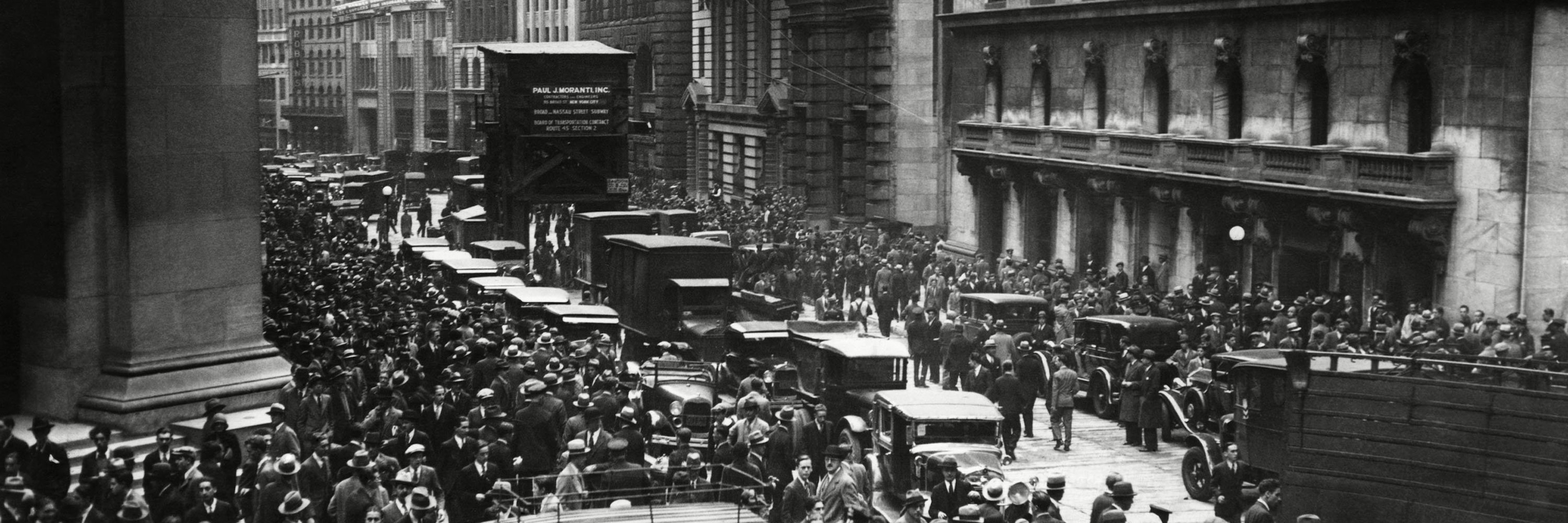
But the good times didn’t last. In October 1929, the Wall Street Crash abruptly ended the decade’s boom.

1930s-40s:

Resilience through crisis

Amid the turmoil created by the Wall Street Crash, Baillie Gifford’s business continued to grow, expanding by taking on the management of three new trusts and opening its first office in London.
 

After Augustus Baillie’s death on 8 January 1939, the Second World War brought fresh challenges, with many of the firm’s staff serving in uniform. Carlyle Gifford, now in his late 50s, received papers from the Governor of the Bank of England, requesting that he advise HM Treasury on how to build a war chest by requisitioning assets in exchange for government bonds to be sold to the US to help fund Britain’s war effort. In November 1939, Gifford travelled to New York to negotiate the sale of an estimated $4.4bn worth of dollar assets to the US, securing vital resources for the country. He was subsequently involved in the follow-up discussions in 1941 that led to the government securing a $425m loan. 

By the late 1940s, the firm was managing pension funds for companies such as Cadbury and The Times, marking the start of long-term partnerships that continue to define us, and its investment trusts were once again outperforming.

Mounted police patrolling crowded streets at Wall Street and Broad Street on Black Thursday, with NY Stock Exchange building on the left.

1950s-60s:

Expanding horizons

After the war, Baillie Gifford looked outward. The devaluation of sterling in 1949 made it easier to invest in the US again, and the firm seized the opportunity, delivering strong returns for shareholders over the following decade and a half.


However, the firm was storing up problems for its future. By 1950, Carlyle Gifford was approaching 70 and no longer oversaw day-to-day matters. The partner in charge opted to focus on existing business rather than expansion.

The 1960s brought challenges. New tax laws and regulations made investment trusts less attractive, and some were forced to merge. Despite this, Baillie Gifford remained forward-looking. It was among the first to invest in Japan when the market reopened, backing companies such as Canon.

While the firm missed some opportunities by focusing on existing business, its global outlook and early moves into Asia laid the groundwork for future growth.

1970s:

A wake-up call

The 1970s were tough. Inflation soared, markets slumped, and Baillie Gifford lost key pension fund clients. New regulations also made investment trusts less attractive, leading to mergers across the industry. But 1978 was a turning point.


This was when one of the firm’s core trusts was taken over, a stark reminder of how vulnerable the business had become. In response, Baillie Gifford shifted focus, securing new clients such as the WS Widows Fund and the Church of Scotland, ensuring we could continue to chart our own course and laying the groundwork for a broader, more resilient business.

1980s:

Rebuilding momentum

After a difficult decade, market reforms and tax changes sparked a long bull run, and Baillie Gifford seized the moment. New investment trusts were launched, including two focused on Japan, and a range of open-ended funds made investing more accessible.

 

The firm also expanded its pension fund business, winning clients such as Michelin, Essex County Council and Distillers. By the decade's end, assets under management had grown more than tenfold, from £300m in 1979 to £3.5bn in 1989.

It was a decade of rebuilding and laying the foundations for global growth.

New York city skyline looking at downtown from 5th Avenue and Central Park South, circa 1959.

1990s:

Going global

In the 1990s, Baillie Gifford expanded far beyond the UK. We formed partnerships in Japan and the US and began managing pension funds for major organisations such as the states of New York and Wisconsin, Goodyear and United Airlines. This led to the opening of our first US office.


Back home, our UK pension fund business continued to grow, and we launched Baillie Gifford Life Limited to support it. We also took on new trusts and strengthened our presence in Asia with the Pacific Horizon Trust.

By the end of the decade, our global outlook took shape, with a deepening commitment to client relationships and assets under management reaching £16.2bn.

2000s:

A new way to invest

In the early 2000s, Baillie Gifford took a bold step away from industry norms. While many firms focused on tracking benchmarks, we built concentrated portfolios of high-quality companies. Our approach of backing our judgment rather than following the crowd attracted forward-thinking clients worldwide, including pension funds in Australia, South Korea and the BBC in the UK.


We also began managing part of Vanguard’s International Growth Fund, a relationship that continues today.

Despite market shocks such as the dotcom crash and the Global Financial Crisis, we kept growing: adding new trusts, expanding into fixed income and deepening our partnerships in Japan and the US. By the end of 2007, as we approached our centenary, we managed over £55bn in assets.

2008–Present:

Investing in the future

The past two decades have brought rapid change, from smartphones and electric vehicles to biotech breakthroughs and climate awareness. Baillie Gifford has focused on backing the exceptional, often founder-led, companies driving this progress. We’ve deepened our global reach across Continental Europe, Asia and South America, opening offices in Hong Kong and Shanghai, and now work with clients in 46 countries.

 

We’ve also expanded into private markets, launched funds with sustainability goals, and partnered with leading thinkers to help us anticipate long-term trends.

Despite challenges such as the financial crisis, the pandemic and rising inflation, we’ve stayed true to our long-term investment approach. As of 31 March 2025, we manage over £197bn in assets and remain the UK’s only large-scale independent, unlimited-liability investment partnership. Putting our clients’ interests first, we remain committed to independence, innovation and long-term thinking.

Actual investors

Long-term vision

We understand that the proper aim of the investment business is to direct capital to creating the goods and services that improve everyone’s lives.